1 • Sadness: a pathology… or a sin?
Did you know that in the early centuries, the Church Fathers included sadness in the list of so-called “evil thoughts“?
In practice, according to Evagrius Ponticus (4th century), John Cassian (4th-5th centuries), and Gregory the Great (6th century), sadness was a “deadly sin!” (*)
(*) (In particular, Evagrius placed it between avarice and wrath, meaning between an unhealthy attachment to material things and violence to achieve one’s own ends)
…but…
…but how is it possible?
…I mean… are you telling me that sadness is a sin?
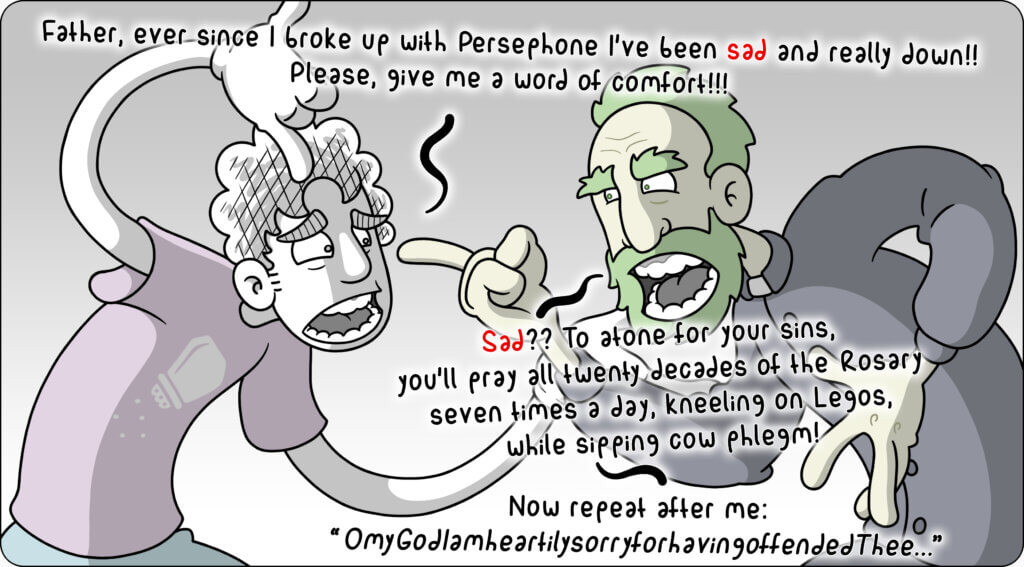
Isn’t it a bit exaggerated?
Without considering that in our culture, sadness, anxieties, worries, and various sorrows are part of everyday life, a constant presence in everyone’s life…
…in fact, these feelings often blend with our lifestyle: raise your hand if you’ve never said (or thought) the phrase “I can’t catch a break!“< or “just my luck!”/p>
In short, stating that “sadness is a sin” in the third millennium seems like a rather exaggerated, anachronistic, naive assertion…
…
…or not?
I don’t know…
…I’ll try to let myself be challenged by the Fathers of the early centuries:
- Is it possible that in many sad moments of my life, I also had some responsibility?
- Is it possible that my will played a decisive role in welcoming or rejecting certain moods?
- And (more generally) do feelings rain down on me passively and totally uncontrollably, or is there a choice that happens in my heart, and therefore, my freedom?
(N.B. Far be it from me to deny the existence of depressive disorders or other psychological pathologies, which often play a dramatic role in the lives of many people; on those, there’s little to discuss, one needs a psychologist, a psychiatrist, a psychotherapist, a specialist… I’m referring here to the everyday life of poor souls like me, who, until proven otherwise, don’t have mental illnesses but often find themselves struggling against sadness)
2 • Sadness, a harmful tenant
Here is how Evagrius Ponticus (345-399), an ancient Greek monk and ascetic, described sadness:
Sadness is a harmful tenant, a sinister confidant, a harbinger of uprooting, a homesickness, a companion of anguish, a relative of sloth, an exasperating lament, a reminder of offenses, a darkening of the soul, moral humiliation, cautious intoxication, hypnotic antidote, dimming of forms, a worm of the flesh, affliction of thoughts, prison of a people.
(EVAGRIO PONTICO, I vizi opposti alle virtù, No. 5)
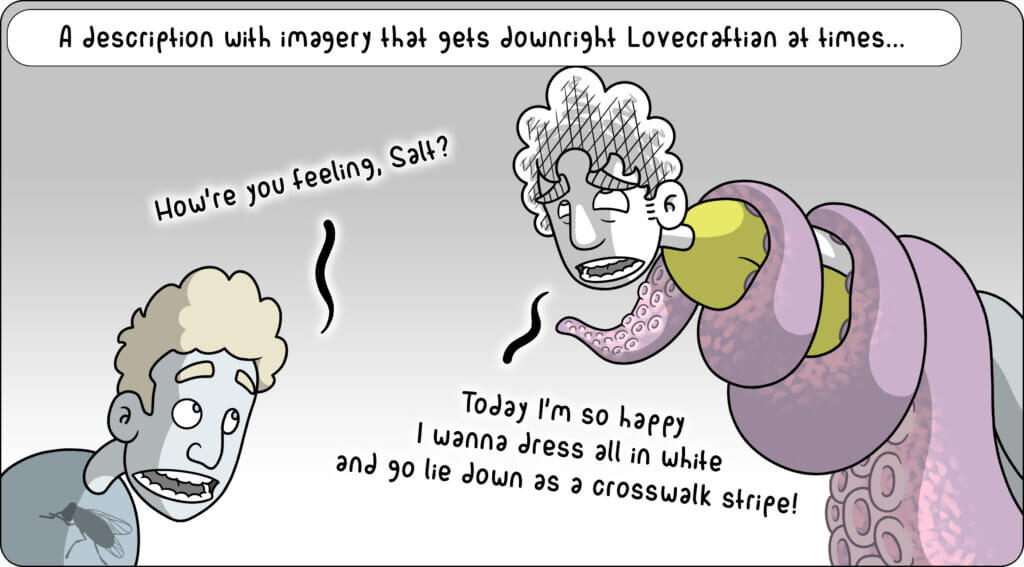
Evagrius captures that sensation very well:
- the paralyzing numbness;
- the loss of a horizon of expectations;
- the suspicion that everything is lost;
- the fear that the train has passed;
- the intimate certainty that you had that chance, but now you’ve missed it.
Gregory the Great (circa 540 – 604), the 64th bishop of Rome, described that inner voice like this:
Sadness often exhorts, almost in the name of reason, the dominated heart, saying: “What pleasure do you get from swallowing so many bitter things from your neighbor? You must show the dark side to those who embitter you with so much gall.
(GREGORY THE GREAT, Commento morale a Giobbe VI, 31, 45, 90)
And Evagrius adds that sadness, leveraging past memories, distorts memory, contaminating it with regrets and resignation for the future:
[…] since things of the past are no more and can no longer be because of the life I am leading.
(EVAGRIOUS PONTICUS, Trattato pratico 10)
Therefore, by insinuating through these thoughts, sadness loosens the tension that drives towards good, numbs, takes away motivations, and prevents us from rolling up our sleeves.
3 • The cause of sadness
According to John Cassian (360-435), a monk originally from Scythia, the cause of sadness is as follows:
Sometimes sadness is a consequence of preceding anger, or it is generated by a frustrated desire or some missed gain when one sees the hope one had for this or that thing vanish.
(JOHN CASSIAN, Istruzioni cenobitiche IX, 4)
What is a “frustrated desire“?
It is a desire that cannot be realized (either because one fails in the attempt, or because the goal is so distant that disillusionment makes one let go).
So what should I do if I’m sad? Should I go into Zen mode?
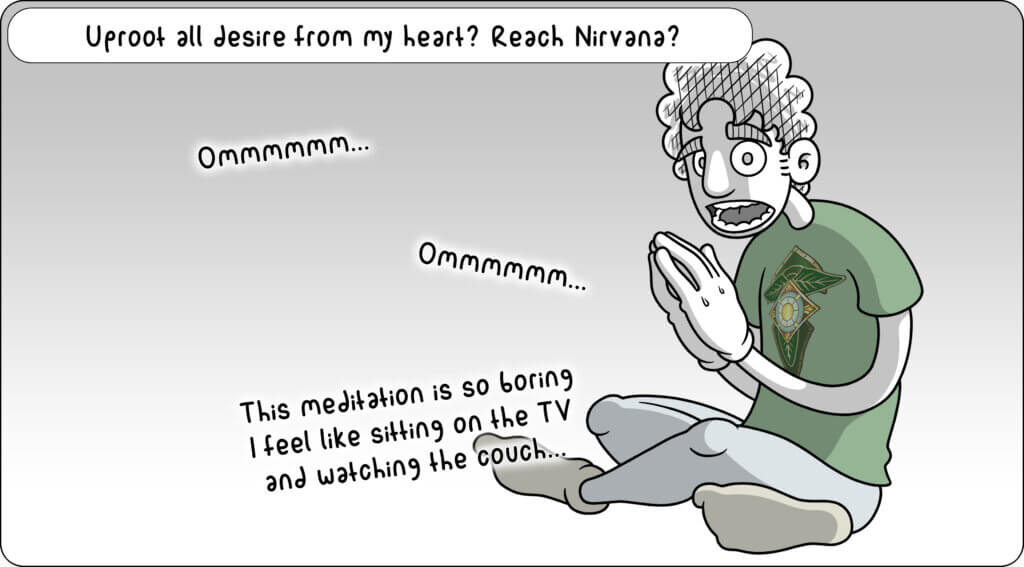
Obviously not.
Desires are, of course, a natural component of human life.
The problem arises, however, when a desire is tainted by selfishness.
When I attach my heart to a desire. When that desire becomes “my preciiious.” When it becomes the center of my thoughts. When I have the illusion that “that thing there” will make me happy. When I believe that if I don’t obtain it, I will “die.”
In other words, when a desire is experienced in philautia.
With this word, the Fathers referred to “excessive self-love,” living in a self-centered way, “I want,” “I demand,” “I insist,” “I,” “I,” “I“…
Note! It is possible to attach the heart even to the purest, most beautiful, and holiest desire in the world! In that case, the desire remains good… but the attachment does not.
A person can be so attached to their positive proposal, their project, their vision of the mission to be accomplished, because it is so good, so evangelical, that they don’t even realize it is genuine philautia.
Indeed philautia can disguise itself behind an attachment to good things, purposes, ideas, and projects.
The person who has an attachment may realize that it would be good to be completely free because only in this way can they entrust themselves to God and build their life on Him. However, even if they know this is necessary, they take no action, do nothing for this, always postponing the decision without using the means that Christian spirituality offers for this step.
It is possible to pray for hours without allowing prayer to help achieve freedom.
One can fast without it resulting in greater inner freedom. The person may not use the means of
Christian asceticism or, if capable of using them, not use them for this purpose.
(MARKO IVAN RUPNIK, Il discernimento : 1: Verso il gusto di Dio, 2: Come rimanere con Cristo, Lipa, Roma 2009, p. 191)
4 • Areas troubled by sadness
According to John Cassian (in “Al vescovo Castore. Gli otto pensieri viziosi“), sadness contaminates two areas:
- the relationship with God (especially prayer);
- the relationship with others.
4.1 • Relationship with God
Sadness nurtures a sense of generalized distrust…
…everything seems to crumble… everything seems to lose its meaning…
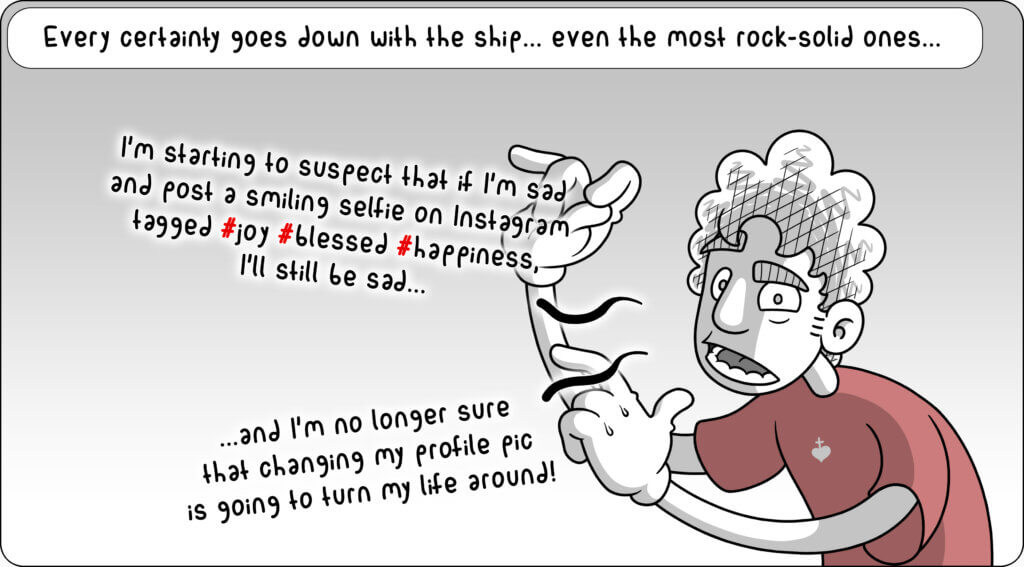
…every action seems futile, starting from those that require time and do not seem to yield immediate results… the first of these is prayer:
The monk (*) afflicted by sadness does not experience spiritual joy, like one with a high fever does not taste honey. The saddened monk does not direct his mind to contemplation nor raises a pure prayer to heaven; sadness is an obstacle to every good. Having bound feet is an obstacle to running; sadness is an obstacle to contemplation.
(EVAGRIUS PONTICUS, Gli otto spiriti della malvagità 1)
(*) (Evagrius describes this dynamic in the monk’s heart, but it applies to everyone: fathers, mothers, sons, laypeople, priests, nuns, cardinals, popes)
Just as vinegar and wine mixed together do not have the same taste, so sadness mixed with the Holy Spirit does not preserve the same prayer.
(SHEPHERD OF HERMAS, Precetto X, 42, 3)
4.2 – The relationship with others
When the heart is poisoned by sadness, even relationships with others lose serenity; when we are down but “forced” to interact with someone, we find ourselves thinking things like:
- “Fool, how dare you be happy in front of me!“
- “Yes, okay, you’re married and have a family! Do you want applause?“
- “Cursed be the day you were conceived!“
- “I have no other explanation: you were born from the backside!“
[…] it becomes difficult to look at the other with serenity; we prefer to avoid them, as if the other were the cause of our desolation and failure.
(ADALBERTO PIOVANO, Tristezza, San Paolo, Cinisello Balsamo (MI) 2012, p. 64-65)
In relationships with others, sadness nests mainly in two closely related attitudes: envy and resentment.
(Ibid., p.88)
A heart chained and suffocated by sadness, devoid of the joy and consolation of the Spirit, risks pouring this inner darkness onto others, causing dismay and discouragement.
(Ibid., p.89)
5 • Healing from Sadness?
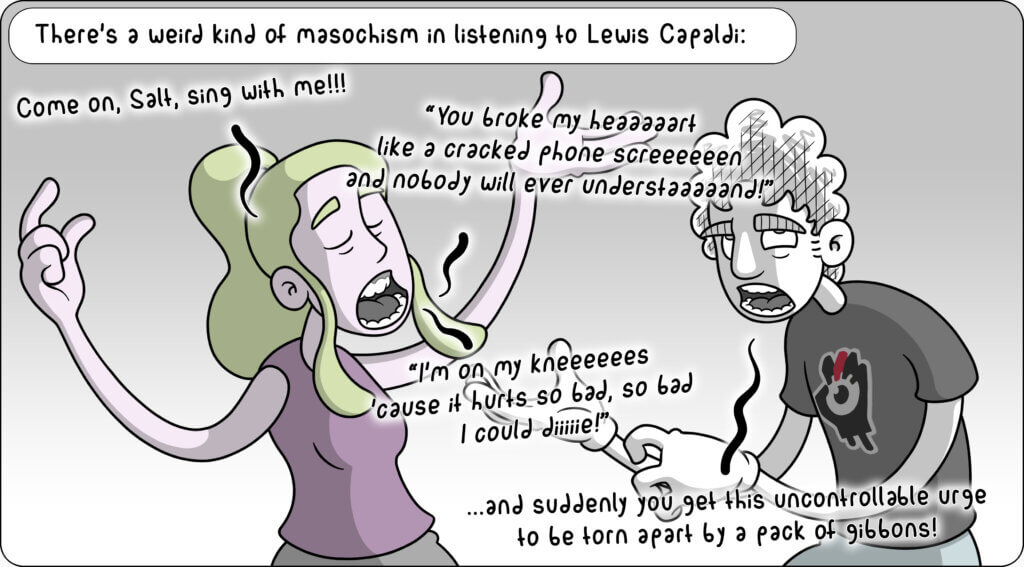
Our culture is chock-full of melancholic movies, sad songs, and depressed artists…
…all of this actually taps into a tendency in the human heart: there is a certain satisfaction in sadness.
It is not uncommon […] for the sick person to take pleasure in this illness, deriving the “secondary benefit” of a certain morbid enjoyment, and thus passively surrender to their condition, without even realizing that they are prey to a particularly serious passion for its harmful effects on their entire spiritual life.
(JEAN-CLAUDE LARCHET, Terapia delle malattie spirituali. Una introduzione alla tradizione ascetica della Chiesa ortodossa , San Paolo, Cinisello Balsamo (MI) 2003, p. 578)
There is something satisfying in playing the victim.
There is a certain pleasure in standing on the side of martyrs.
In short, in this adverse context, if someone wants to combat sadness, where can they start?
The Fathers of the early centuries have written rivers of ink on the subject… but, all in all, their thought can be summarized in these two verses:
Why are you cast down, O my soul?
And why are you disquieted within me?
Hope in God;
For I shall yet praise Him,
The help of my countenance and my God.
(Psalm 43:5)
[…] Rejoicing in hope, patient in tribulation, continuing steadfastly in prayer;.
(Romans 12:12)
The most fruitful remedies against sadness are two:
- Nourishing oneself with Hope;
- Continuing to pray.
5.1 • Nourishing Oneself with Hope
If sadness clouds the vision to the extent that every view of good, for oneself and for others, becomes impossible and removes all trust in what God can do for man, hope becomes the gaze towards a possible (yet to be possessed) and desirable goal; joy is the fruit of this gaze.
(ADALBERTO PIOVANO, Tristezza, San Paolo, Cinisello Balsamo (MI) 2012, p. 135)
Sadness urges me to lower my gaze, to close my perspective, to turn back with nostalgia…
…Hope, on the other hand, makes me lift my head, allows me to look into the future without distressing myself.
But what does it mean to overcome sadness by “nourishing oneself with Hope“?
- “Imagining that everything will be fine?“
- “Striving to believe that things will work out?“
- “Seeing the glass half full?“
- “Thinking positively?“
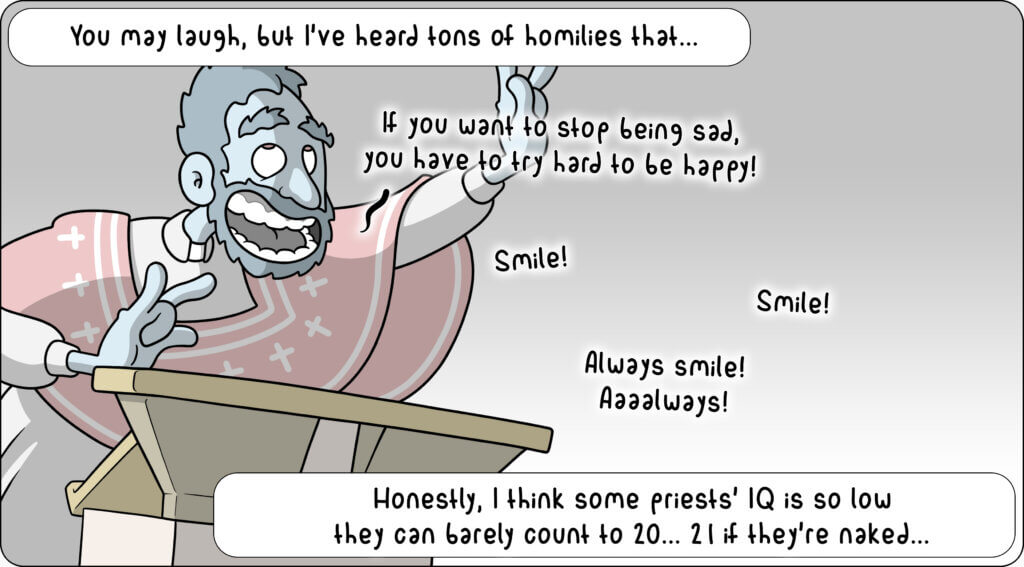
It’s not about making an effort.
Hope is not something human; it is a theological virtue… that is, it is a gift from God; it does not rely on my strength, and I do not give it to myself:
Hope frees from sadness, if it has the quality of the eternal, if it is directed towards what does not die, what contains life, what is beyond what is possessed.
Any hope that remains confined within the humanly predictable, the already known or planned, the visible, is destined to fail.
(ADALBERTO PIOVANO, Tristezza, San Paolo, Cinisello Balsamo (MI) 2012, p. 137)
5.2 • Continuing to Pray
To overcome sadness, hope must make a “qualitative leap.”
This leap is made possible by prayer.
Sadness leads to distrusting God… to being silent with Him… to living a relationship with the Father as if separated in the same house… to reproaching Him: “Lord, if you had been here, this would not have happened” (cf. Jn 11:32)… to eliminating prayer…
On the contrary, prayer urges us to “stay”:
- Stay with Him;
- Stay under His gaze;
- Stay on His word;
- Open the fists in which I hold my projects (too tightly?);
- Entrust to God my desires, asking Him to give them back to me (if they truly correspond to something He has placed in my heart), but without “being possessed” by them like Gollum with the Ring.
One of the most fruitful prayers is that on the Word of God: be it the book of Job, Ecclesiastes, the Psalms, the Gospel of Mark, or that of John…
…meditating on the Word, one discovers that it is not true that it is dry; on the contrary, it is a balm that, drop by drop, heals a heart hardened by sadness:
Until this wound of sadness is closed, the remedy of consolation will be applied to it. For if doctors treat the sores of the body until every pain has ceased, should we not act in the same way regarding the ills of the soul?
The wound of your souls is sadness, and the beneficial water of sweet words must be continuously poured over it… Doctors need a sponge, we apply the remedy with words: we do not need fire, like doctors to heat the water; it is the grace of the Holy Spirit that warms our words.
(GIOVANNI CRISOSTOMO, Omelie sulle statue GIOVANNI CRISOSTOMO, Omelie sulle statue [Homilies on statues] VI, 1)
Conclusion
I conclude with another word from a priest of the Diocese of Rome, Father Fabio Rosini, which does me so much good…
…and which I often return to when certain dark thoughts insinuate themselves, which would otherwise lead me to interpret reality always in the wrong way:
What if what is happening to you is a Grace? What if in what you are cursing there is a great blessing for you? Don’t throw away anything in your life, in your story, in what is happening to you.
Maybe you are not realizing it now.
There is a Grace in everything.
God can transform even the most desperate and painful story into beauty, because the Lord puts a root of salvation in that pain.
Don’t think badly about God, about your past. Everything in God’s mercy and power becomes light! Don’t waste what is happening to you.
The devil’s greatest lie is to make us believe that God wants to fool us.
(FABIO ROSINI, quoted in CLAUDIA VIOLA, ROBERTO REIS, E poi volarono i piatti. Come dal litigio può rinascere l’amore, Porziuncula, Assisi (PG) 2019, p.79-80)
salt
(Summer 2021)
- ADALBERTO PIOVANO, Tristezza, San Paolo, Cinisello Balsamo (MI) 2012
- GABRIELE VECCHIONE, Sapienza collaterale : non sprecare il tuo dolore, Tau Editrice, Todi (PG) 2020