Preface
The title of this page is “What is Vocation?”.
The subtitle (which didn’t make the cut) could have been: “Confused Thoughts of a Donkey Who Hasn’t Found Its Own Yet.”
That said… happy reading!
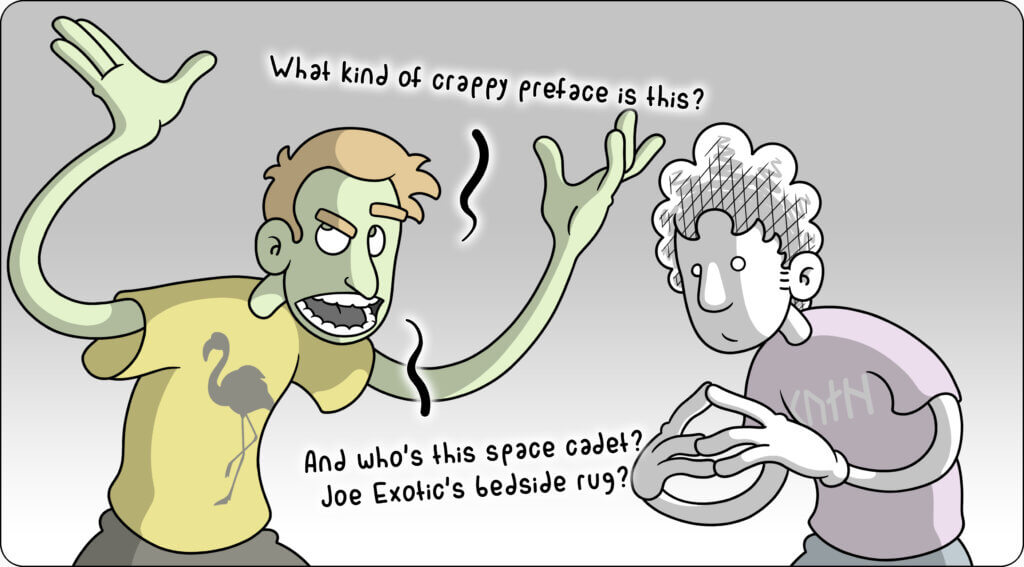
1 • Planning, organizing, scheduling, designing… “Good, but not great”
Nonsense #1:
Until a few years ago, I believed that to find one’s vocation, one had to do these things:
- Write a list of things I like;
- Understand what I am most inclined towards or what intrigues me the most;
- Invest time and resources to become increasingly skilled in that thing;
- “And they all lived happily ever after.”
Then Marko Ivan Rupnik arrived and gave me a good talking to:
[…] thinking and planning our life […], I’m sorry, it doesn’t respond to the vocation.
Planning life is one thing.
Making our existence a beautiful project is one thing.
Guiding our lives on the great altruistic values of solidarity, peace, and goodness can be a beautiful thing, but it’s not the vocation.
It is, indeed, something else.
(MARKO IVAN RUPNIK, Il cammino della vocazione cristiana: di risurrezione in risurrezione, Lipa, Roma 2007, p.43-44)
Nonsense #2:
I had periods of butterflies in my stomach (move over, “Lady and the Tramp”!), where I thought vocation was:
- Finding my soulmate;
- Being with her (which by magic would have solved all my problems like snow in the sun);
- Living happily, for the rest of our days, love in a cottage, “kissy-kissy.”
To sweep away this (wrong) idea of vocation, Rupnik wasn’t enough…
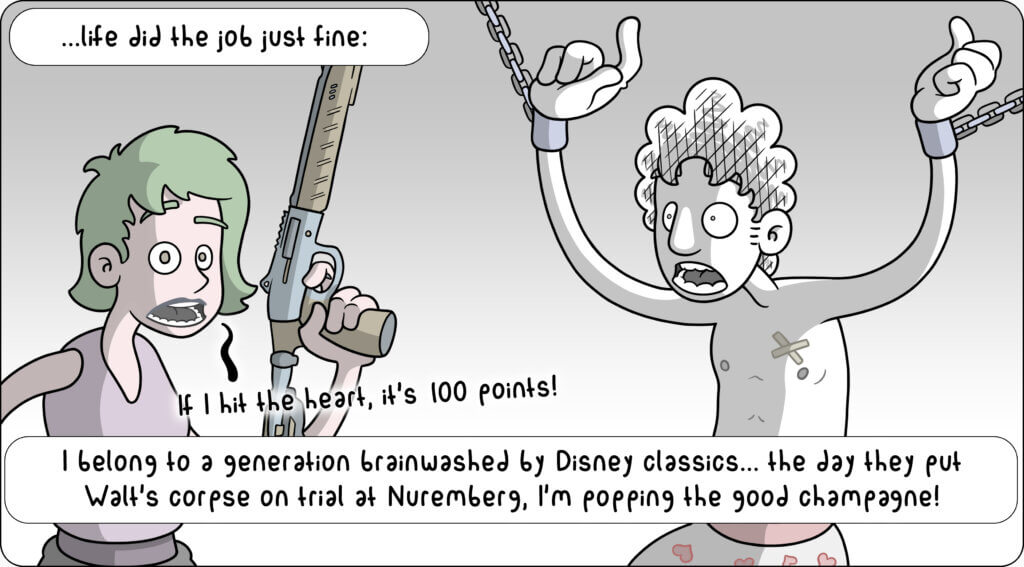
Nonsense #3:
Finally (and this is what made me suffer the most), at some moments in my life, I thought vocation was something that “God wants,” and I must obey reluctantly:
I have met many good and devout people who wanted to do God’s will… But they always saw it as something separate from them, coming from the outside, and to which they had to submit.
It is a mistake… a very serious mistake!
(MARKO IVAN RUPNIK, Il cammino della vocazione cristiana: di risurrezione in risurrezione, Lipa, Roma 2007, p.81)
2 • Ending up on the ground
Now.
I don’t know if it’s an axiom.
But there’s one thing that unites the lives of all the people who have found their vocation (regardless of whether they got married, consecrated themselves to God, etc.)…
…all these people (at a specific moment in their lives) ended up on the ground!
And what happened at that moment?
They were called (*).
The word “vocation” means precisely this: someone “Other” calls you; you don’t call yourself! (*)
And what is the best moment to perceive this voice? (*)
What is the occasion when you can be more certain that this call is not my suggestion but something from God? That it’s not an attempt to convince myself that a path is for me? (*)
(*) (Note: I hope it’s needless to say that when I use expressions like “they were called,” “perceiving a voice,” etc., I mean in an analogical sense! God is free to send all the “archangels Gabriel” He wants… but – normally – He “speaks” to us through the everyday events of our lives)
The answer is simple: when I have run out of energy, resources, ideas, strength, hope:
This great master of the interior life, St. Ignatius of Loyola, shows that the ‘call of the King’ – as he calls it – takes place when a person finds themselves in hell, meditating on a life without God.
When, through intelligence, feelings, and even bodily senses, the person becomes aware of the suffocating, hopeless, and dark situation, enough to freeze the heart, in which they find themselves, it is precisely there, in that situation, that with the right desire, they can lift from their heart an invocation, a prayer for help, for salvation.
It is then that they realize, in an experiential and rational way at the same time, that God Himself is calling them.
[…]
But even here, a distinction must be made. It may be that the redemption I experience is not immediately visible in the concreteness of life.
(MARKO IVAN RUPNIK, Il cammino della vocazione cristiana: di risurrezione in risurrezione, Lipa, Roma 2007, p.58-59)
The vocation is not about having thoughts like, “I really enjoy drawing! This is truly my vocation!” – inserting Jesus somewhere in this reasoning, as if He were a knick-knack, just to ease one’s conscience.
The vocation is not even: “L is for the way you look at me, O is for the only one I see, V is very, very extraordinary, E is even more than anyone that you adore can” (Nat King Cole “L-O-V-E”)
It is not: “I wanted to be a veterinarian ever since I was five!“
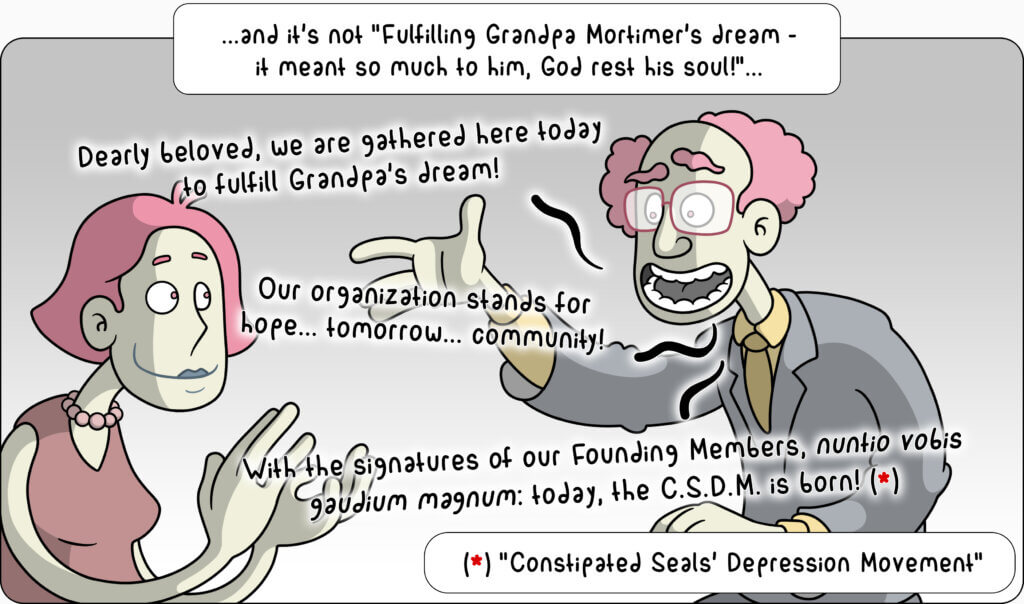
No!
The vocation is Christ pulling me out of the death I’ve gotten myself into, pulling me out of my “tomb” as He did with Lazarus.
3 • Detached from the source, nothing can be produced
If the vocation is realized starting from Christ pulling me out of my tomb, the following corollary can be deduced:
“Without Christ, there is no vocation.”
I realize that this statement may be a bit prickly… even Rupnik, after explaining what vocation is, adds:
Above all, I imagine the anger and rejection that hearing this talk could provoke in those who do not have faith…
(MARKO IVAN RUPNIK, Il cammino della vocazione cristiana: di risurrezione in risurrezione, Lipa, Roma 2007, p.63)
However, if we are honest, these words are no harsher than many others spoken by Jesus Himself… for example:
“I am the vine, you are the branches.
He who abides in Me, and I in him, bears much fruit; for without Me you can do nothing.”
(John 15:5)
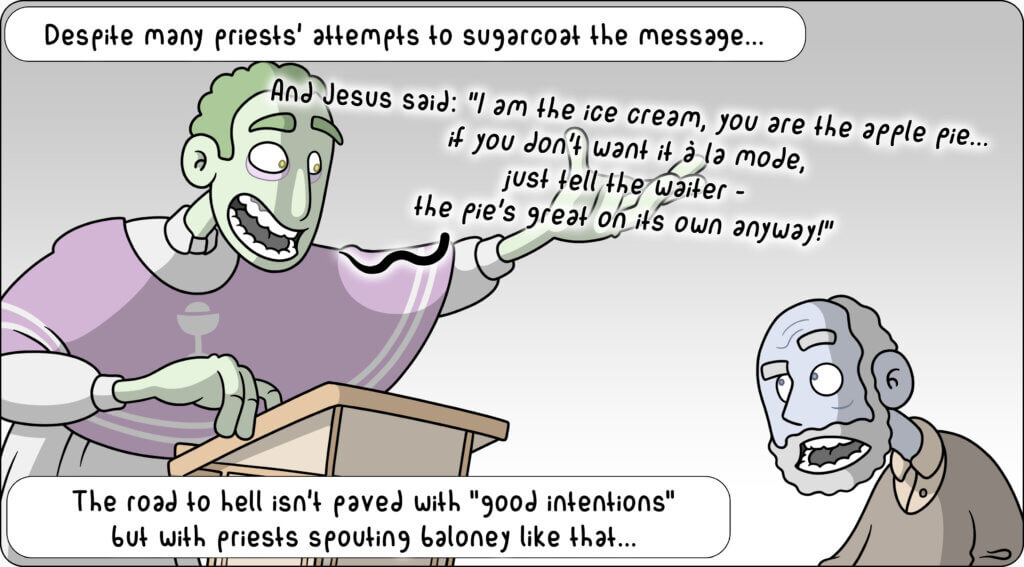
Even reasoning with simple market logic, one can understand that if we live detached from the source, if we are the branch fallen from the vine, we cannot produce anything.
And, if by chance something is produced, one would like to receive a reward for it, because we perceive what we have done as a heroic act, as something deserving.
[…] if I have not received anything and try to squeeze goodness, love, etc., out of myself, I demand that others give me something in return for my effort.
(MARKO IVAN RUPNIK, Il cammino della vocazione cristiana: di risurrezione in risurrezione, Lipa, Roma 2007, p.61-62)
4 • Vocation is incompatible with self-affirmation
Rupnik strongly emphasizes that vocation is incompatible with self-affirmation:
One reality that marks us today is that each of us has our own ideas, projects, and interests that we want to realize and pursue, driven by a desire for self-affirmation that also implies being original at all costs. However, it is difficult to accept another person’s proposal, to enter another logic, to take on a mandate.
And the mission is precisely fulfilled through being sent.
[…]
If vocation consists of the love of the Father, it is impossible to reveal this love by self-assertion, even if this self-assertive principle is disguised in the guise of generosity and altruism.
(MARKO IVAN RUPNIK, Cerco i miei fratelli: lectio divina su Giuseppe d’Egitto, Lipa, Roma 1998, p. 34)
Unless it is built in Him and starting from Him, the desire to be in the spotlight will always prevail (whether one is aware of it or not🙂
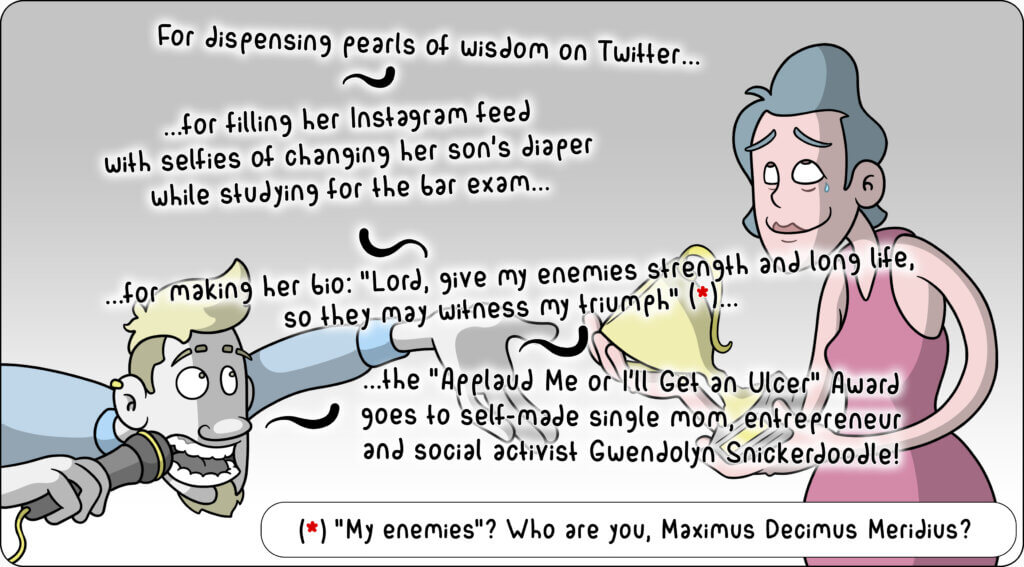
Self-assertion is not the way…
Realizing my vocation means looking at myself as God looked at me on the day of my baptism: standing in front of my desires, my will, my interests, the environment, parents, friends, the Church, and seeing what I could do with all of this in the light of That gaze (cf. MARKO IVAN RUPNIK, Il cammino della vocazione cristiana : di risurrezione in risurrezione, Lipa, Roma 2007, p.82).
Even better (excuse me for the technical jargon I’m about to use), realizing my vocation means becoming phenomenally (in appearance) what I already became ontologically (in my essence) at baptism: son in the Son.
It’s not something external to me.
It’s something that, from the day of Baptism, is more internal to me than myself (cf. AUGUSTINE, Confessions, III,6,11): like a statue, already contained in the block of marble, even before the sculptor works on it.
5 • There is no vocation without death
There’s a funny (not to say dramatic) aspect that accompanies many of the stories of vocations in the Old Testament: fear.
A terrible, overwhelming, enormous fear.
Moses, Jeremiah, Gideon… many characters, when the Lord calls them, hesitate, mock, take a half step back, counter that maybe God made a mistake:
[Jeremiah] “Ah, Lord God! Behold, I cannot speak, for I am a youth.”
(Jeremiah 1:6)
[Moses] “Who am I that I should go to Pharaoh, and that I should bring the children of Israel out of Egypt?”
(Exodus 3:11)
[Moses] “But suppose they will not believe me or listen to my voice”
(Exodus 4:1)
[Moses] “O my Lord, I am not eloquent, neither before nor since You have spoken to Your servant; but I am slow of speech and slow of tongue.”
(Exodus 4:10)
[Gideon] “O my Lord, how can I save Israel? Indeed my clan is the weakest in Manasseh, and I am the least in my father’s house.”
(Judges 6:15)
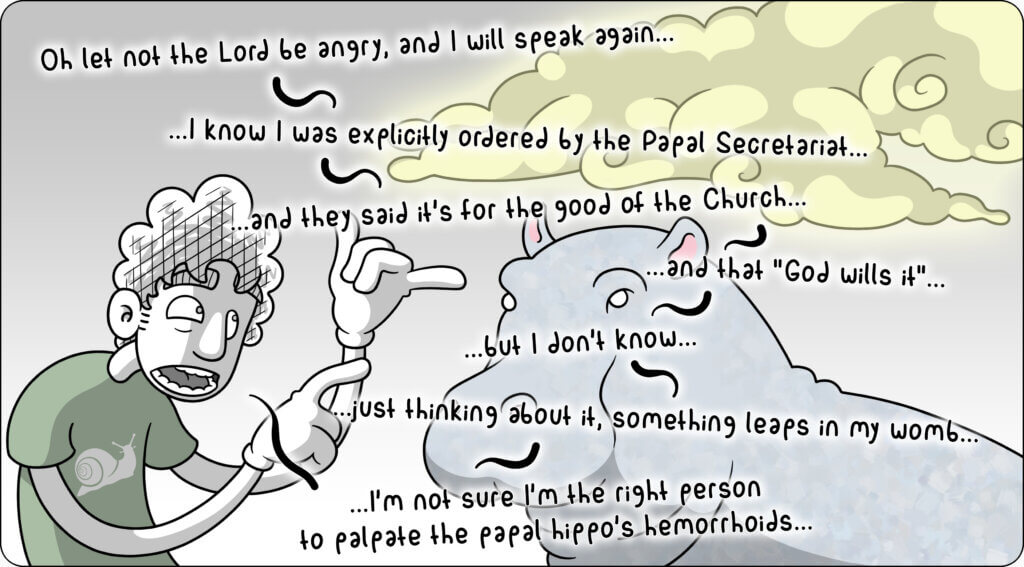
Why all this fear?
Well…
In the stories of the Bible characters…
…in the lives of the saints…
…or in our daily lives…
…there’s a common element:
It can be argued that “vocation” is a call to exit the womb to walk toward death.
[…]
The difficulty of accepting, or rather recognizing as sensible, such an order is manifested in an instinctive rebellion of the living body, which recoils from the prospect of dying.
A person called by God is afraid.
Fear is a bodily reaction, often associated with an act of consciousness, which, in the face of a current threat, seeks the most convenient (and reasonable) way to escape it.
[…] divine election does not eliminate death; it rather assumes it as its necessary mediation. The awareness of vocation coincides with the awareness of one’s destiny, the destiny of a “lamb led to the slaughter.”
(PIETRO BOVATI, “Così parla il Signore” – Studi sul profetismo biblico, EDB, Bologna 2008, p. 94)
And since often the people who are frightening are precisely those to whom one is sent (cf. for example Jer 1:8,17), fear is perfectly natural.
Objections, attempts to wriggle out, and efforts to resist are legitimate (and indeed, sometimes even necessary).
Why the fear? Because the person called imagines walking the path of their vocation without God…
…and it is a sensible fear because without God, failure is certain: Moses, Jeremiah, Benedict of Nursia, Francis of Assisi, Ignatius of Loyola, …none of them would have done what they did without the grace of God.
To embrace a vocation, faith is necessary: believing in oneself or thinking that one is alone and powerless are two sides of the same lack of surrender to God […].
(PIETRO BOVATI, “Così parla il Signore” – Studi sul profetismo biblico, EDB, Bologna 2008, p. 98-99)
Conclusion
In a nutshell:
[…] the climate of the modern era, so focused on the individual, human rationality, and the human perspective, makes us think of vocation more in terms of a life project, self-programming, thus letting it escape our understanding that it is an encounter, someone reaching us by calling, the response to this call. This response is not a decision made; rather, it is a surrender, an entrusting of ourselves, a real shift of ourselves, uprooting us […] from our closed and self-focused ego, transplanting us into Christ.
(MARKO IVAN RUPNIK, Alla mensa di Betania: la fede, la tomba e l’amicizia, Lipa, Roma 2004, p.39)
And that’s it.
I conclude with a passage from “I Promessi Sposi” (The Betrothed) by Alessandro Manzoni (1785-1873):
Donna Prassede was a very kind old lady very inclined to do good: certainly the most worthy profession that a person can exercise, but unfortunately one that can also be spoiled, like all others.
[…]
For, as she often said to others and to herself, her whole aim was to fulfill the wishes of heaven: but she often made a big mistake, which was to mistake her brain for heaven.
(ALESSANDRO MANZONI, I Promessi Sposi, Chapter XXV)
salt
(Summer 2021)
- MARKO IVAN RUPNIK, Il cammino della vocazione cristiana : di risurrezione in risurrezione, Lipa, Roma 2007
- MARKO IVAN RUPNIK, Alla mensa di Betania : la fede, la tomba e l'amicizia, Lipa, Roma 2004
- PIETRO BOVATI, Così parla il Signore - Studi sul profetismo biblico, EDB, Bologna 2008
- MARKO IVAN RUPNIK, Gli si gettò al collo : lectio divina sulla parabola del padre misericordioso, Lipa, Roma 1997